Rushed Development Projects Neglect Society
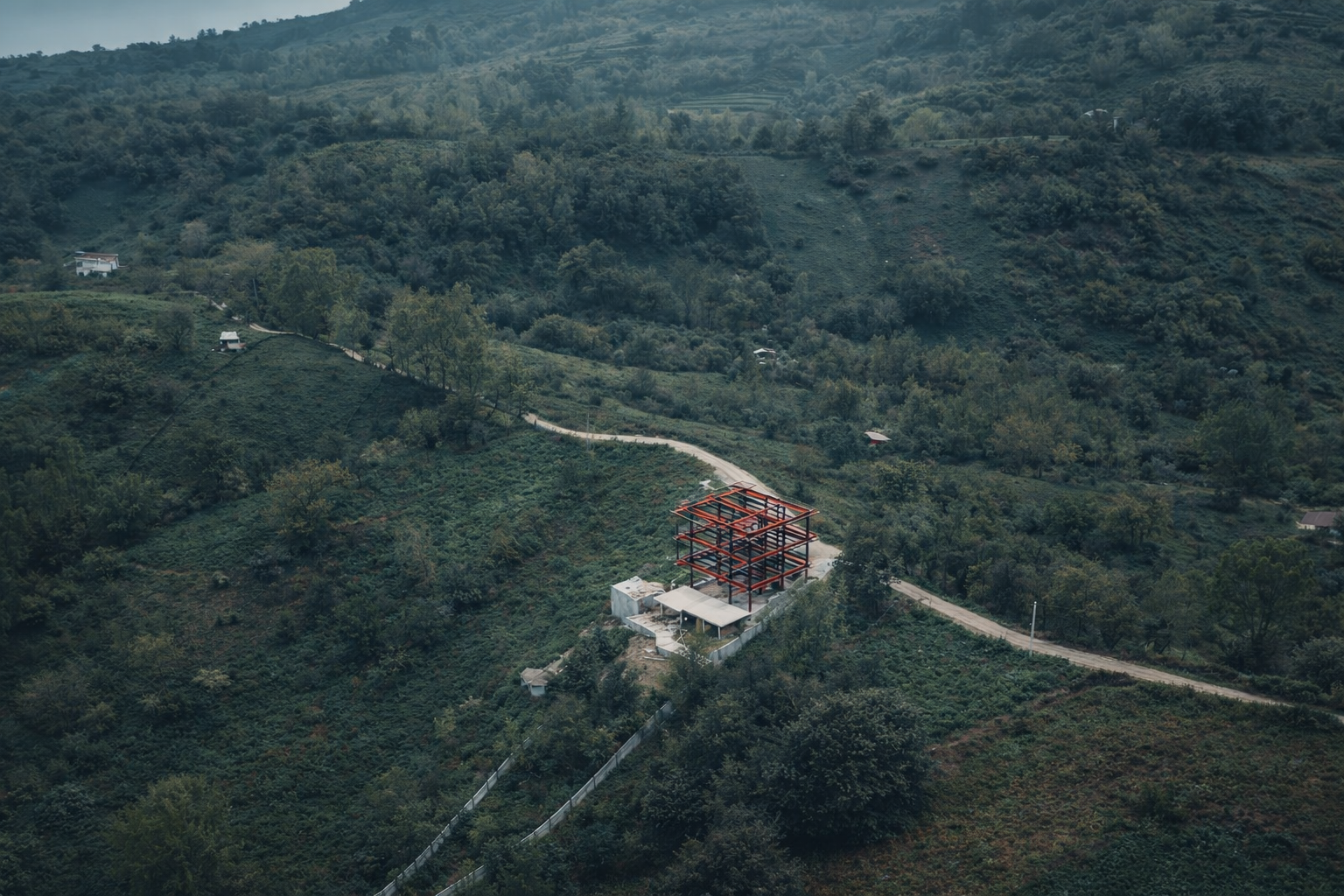
In recent years, many construction consultancy firms in Iran, particularly in the provinces of Guilan and Mazandaran have faced serious consequences due to ignoring environmental and social considerations and pursuing rushed development projects within natural landscapes.
This pattern of development, carried out without due attention to the transformation processes of urban and rural fabrics, has continued repetitively. As a result, today the region is experiencing excessive pressure on its valuable natural ecosystems and on its original inhabitants, to the point where such development has effectively turned into anti-development.
Whether in the form of mountain excavation and deforestation, or through unregulated construction in dense urban fabrics, villages, gardens, and agricultural lands, this trend represents not only an environmental challenge but also a serious risk to business sustainability. Ironically, this same form of development has repeatedly been justified under the pretext of “job creation,” while in practice producing the opposite outcome.
These companies and their spokespeople attempt to legitimize their projects by emphasizing employment generation in the construction sector. Projects often launched under the banner of “addressing housing shortages” ultimately result in the creation of artificial demand for multi-home ownership and the expansion of real estate speculation.
Similarly, projects branded as “tourism development” have increasingly shifted toward the construction of high-rise hotels and towers, the negative impacts of which on the communities and natural environments of Guilan and Mazandaran are now clearly visible.
The Iranian Context: Business Instability and Social Sensitivity
In Iran particularly in environmentally sensitive provinces such as Guilan, social pressure against projects that lead to deforestation, land-use change of natural and agricultural areas, and increased environmental risks is steadily rising.
Although environmental regulations may be weakly enforced in some cases, and companies may find ways to circumvent legal requirements in order to obtain permits, public awareness, social media, and expert environmental activists have significantly accelerated societal responses to environmental degradation. This dynamic can directly affect the reputation and market position of consultancy firms.
This situation demonstrates that business sustainability can no longer be reduced to mere legal compliance or the repetitive execution of projects. A growing segment of society has recognized that the destruction of forests, mountain bodies, water resources, and valuable ecosystems entails not only environmental damage but also serious economic, social, and cultural consequences.
Undoubtedly, weaknesses in law enforcement, regulatory gaps, or the ability to bypass regulations in today’s Iran have led some actors in the construction industry to believe that the cost of environmental degradation is minimal or manageable. However, this perception overlooks a crucial social reality: Iranian society especially in provinces such as Guilan, has become more aware, more sensitive, and more persistent than in the past.
Discourses surrounding mountain integrity, forests, groundwater resources, wetlands, and fragile ecosystems are no longer marginal topics. They have increasingly entered public space, media outlets, social networks, and even everyday conversations. Contrary to common assumptions, the pace of this social awareness is accelerating, and the time gap between environmentally harmful actions and social backlash is steadily shrinking.
Under such conditions, companies that continue to disregard their environmental responsibilities face not only legal risks, but also serious reputational, social, and economic risks. Public distrust, informal social boycotts, media pressure, erosion of social capital, and even difficulties in attracting investors or skilled professionals are among the direct consequences of such approaches.
In regions such as Guilan, where the relationship between nature, local identity, and everyday life is deeply intertwined, environmental destruction is perceived not merely as a technical or managerial failure, but as an assault on collective memory and the region’s livable future. Ignoring these sensitivities can place any business especially within Iran’s complex and volatile economic context at serious risk.
Today, attention to environmental issues is no longer an ethical or promotional choice; it has become a core component of business sustainability. Companies that fail to recognize this reality in time may soon face costs that no legal loophole or regulatory workaround can offset.
Even obtaining formal permits is no longer sufficient to secure public acceptance, as the exploitative use of nature and its negative social impacts are now widely understood. This calls for a fundamental reassessment of prevailing development approaches.
Public Pressure and Corporate Behavior Change: The Kimberly-Clark Case
One of the most prominent global examples in this field is the Kleercut campaign against Kimberly-Clark, one of the world’s largest paper product manufacturers, known for brands such as Kleenex. Conducted between 2004 and 2009 by organizations such as Greenpeace and the Natural Resources Defense Council (NRDC), the campaign targeted the company’s extensive use of virgin wood pulp sourced from Canada’s ecologically valuable boreal forests, including the Great Bear Rainforest, within its supply chain.
Environmental activists employed various strategies, including street protests, consumer boycott campaigns, the publication of field reports supported by visual evidence (photographs and videos), and advocacy efforts urging institutions, universities, and major retailers such as Walmart to cut ties with Kimberly-Clark. These actions significantly reshaped the company’s public image.
Although the campaign was lengthy—taking more than five years—and reflected the company’s initial resistance (including denial of claims as misleading publicity), sustained public and media pressure ultimately led to a shift in corporate policy.
Kimberly-Clark committed to sourcing 40% of its fiber from sustainable and recycled sources (FSC-certified) and halted procurement from the contested forest areas. However, a critical downside of this outcome lies in its proximity to greenwashing, where companies may announce commitments primarily to improve public image without ensuring meaningful implementation.
To mitigate this risk, civil society organizations must maintain public awareness through continuous disclosure, transparency in sourcing data, and independent monitoring of corporate sustainability reports.
This case demonstrates that public opinion, civil society groups, and consumers can compel corporations to reassess their environmental practices even in the absence of strong regulatory oversight. Such reassessments can, in turn, enhance brand credibility, reduce legal risks, and support long-term business sustainability.
Preliminary Policy Recommendations for Iran (with a Focus on Guilan)
To prevent business instability and strengthen sustainable development, the following measures warrant serious consideration:
Corporate Carbon Transparency: From Emission Measurement to a Shield Against Instability and Greenwashing
One of the most critical tools for preventing business instability and reinforcing sustainable development is the systematic measurement and disclosure of corporate carbon footprints. Carbon disclosure can be defined as the measurement, reporting, and public release of a company’s carbon footprint across all stages of the value chain, including production, transportation, operation, and end-of-life phases.
Systematic disclosure and accounting of greenhouse gas emissions—based on standards such as the GHG Protocol enable companies to first identify and quantify their carbon footprint across the entire value chain, and subsequently design and implement emission-reduction strategies grounded in reliable data.
In this way, carbon reduction is transformed from a marketing slogan into a measurable, monitorable, comparable, and accountable process. This approach compels companies to identify major emission sources and to pursue data-driven mitigation scenarios, such as energy efficiency improvements, fuel switching, and material and process optimization.
Research indicates that companies that transparently measure and disclose carbon emissions are not only more successful in achieving genuine emission reductions, but also perform better in managing legal, financial, and reputational risks. This is because they can set science-based emission reduction targets and credibly demonstrate distance from greenwashing.
Establishing Clear Construction Regulations in Rural Areas
Clear regulations must be established for construction within rural contexts, including the definition of minimum land coverage ratios for residential use, based on the actual needs of households and the future livelihoods of farmers, livestock breeders, and orchard owners. These regulations should balance genuine utilization needs with ecosystem protection, and must be grounded in regional climatic and environmental research to minimize long-term damage.
Promoting Bioregional Materials over Excessive Steel and Concrete
The use of natural, locally sourced, and recyclable materials _such as sustainably managed timber, indigenous traditional materials, and compressed earth_ should be encouraged as alternatives to excessive steel and concrete. These materials reduce environmental impacts and demonstrate greater compatibility with local natural and cultural contexts. In seismic regions, when combined with appropriate engineering design, they can also provide safe structural performance and enhanced flexibility.
Environmental Risk Assessment and Natural Hazard Vulnerability
Every project should undergo comprehensive environmental assessments that exceed minimum legal requirements and actively involve local communities. Factors such as dust storms, soil erosion, flood risks, and seismic hazards must be incorporated as core decision-making criteria from the earliest stages of project planning.
Successful global experiences and locally adapted solutions demonstrate that environmental sustainability and business development are not contradictory, but complementary. Companies that recognize this reality in time can move ahead along sustainable development pathways and reduce future economic and social risks a matter that is more critical than ever in today’s Iran.